
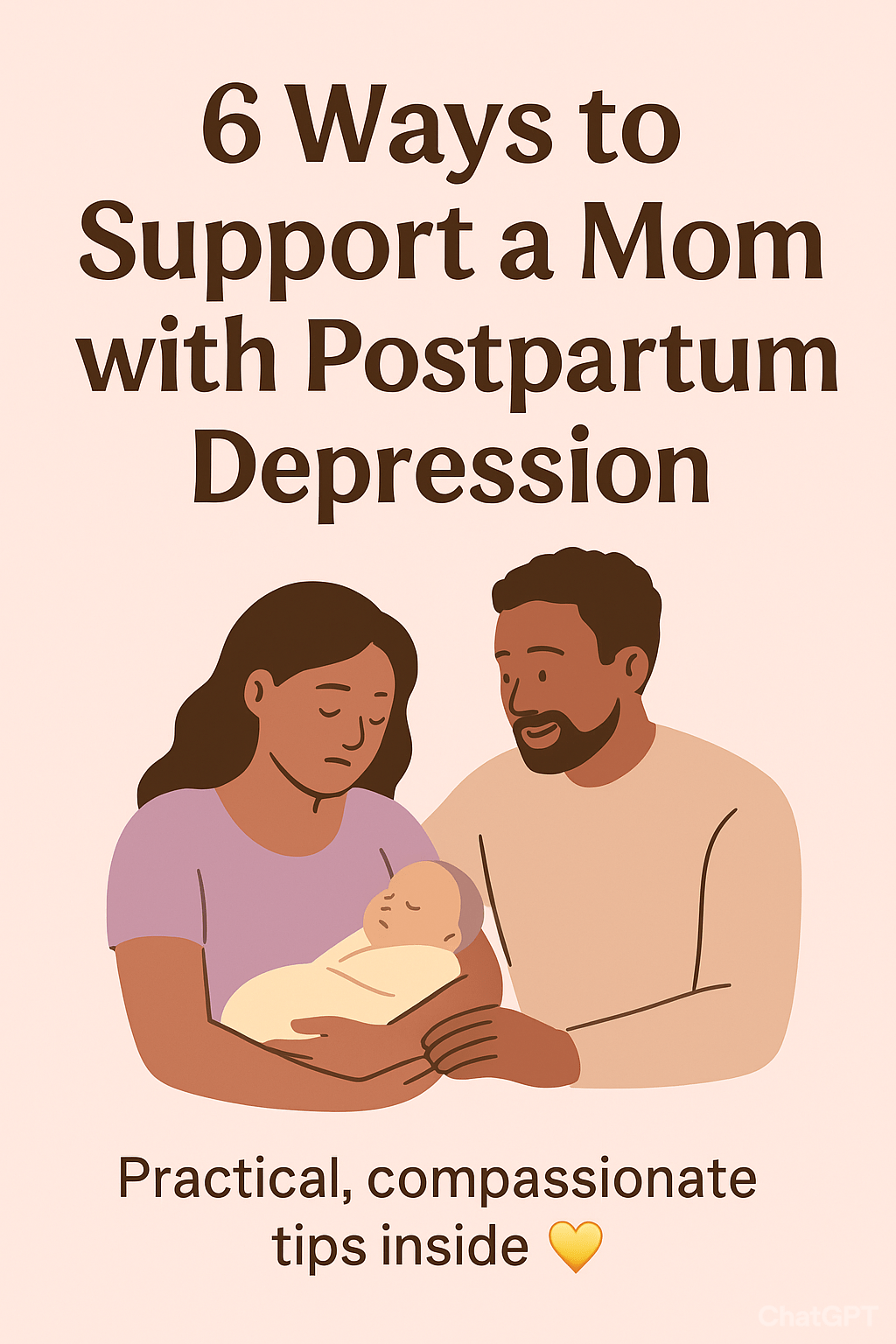
Bringing home a new baby is often pictured as a time filled with joy, snuggles, and happy memories. But for many moms, postpartum depression (PPD) makes this transition overwhelming and isolating. Loved ones—partners, family, and friends—often want to help but aren’t sure how. The truth is, your support can make a world of difference in her recovery.
This guide will walk you through practical, compassionate ways to support a new mom struggling with postpartum depression.
1. Learn to Listen Without Judgment
One of the most powerful things you can do is simply listen. A mom going through PPD may feel guilt or shame for not feeling “happy enough.” Avoid trying to “fix” her feelings or offering quick solutions. Instead:
- Say things like, “I’m here for you,” or “You’re not alone in this.”
- Create space for her to share openly, without fear of judgment.
- Let silence be okay—sometimes being present is all she needs.
2. Take Over Chores and Household Tasks
Postpartum depression can make even small daily tasks feel impossible. Offering practical help can relieve stress and give her room to breathe:
- Cook or drop off a meal.
- Take over laundry or dishes without being asked.
- Run errands so she doesn’t have to.
Even better, don’t wait for her to ask—anticipate what needs to be done.
3. Encourage Rest and Breaks
New moms often feel pressure to “do it all.” Remind her that taking breaks is not selfish—it’s necessary. You can help by:
- Watching the baby so she can nap or shower.
- Suggesting a short walk together for fresh air.
- Offering to care for the baby so she can enjoy a quiet activity she loves.
4. Watch for Warning Signs
While many moms experience “baby blues,” postpartum depression is deeper and longer-lasting. As a partner or loved one, you can help by noticing signs such as:
- Persistent sadness or irritability
- Difficulty bonding with the baby
- Withdrawing from loved ones
- Trouble sleeping (beyond normal newborn exhaustion)
- Thoughts of self-harm
If you notice these signs, encourage her to reach out to her doctor or a mental health professional. Offer to go with her to the appointment if she feels nervous.
5. Offer Emotional Encouragement
A mom struggling with PPD may feel like she’s failing, even though she’s doing her best. Uplift her with reminders:
- “You’re a wonderful mom, even on tough days.”
- “It’s okay to ask for help. You don’t have to carry this alone.”
- “I’m proud of you.”
Sometimes these small affirmations can help her feel seen and valued.
6. Take Care of Yourself, Too
Supporting someone with PPD can be emotionally draining. Make sure you’re practicing self-care so you can show up fully for her. This might include getting your own rest, seeking support from friends, or talking with a counselor. Remember: supporting her doesn’t mean you have to do it perfectly—you just have to show up.
Final Thoughts
Postpartum depression is not a reflection of a mom’s love for her baby—it’s a medical condition that requires compassion and support. As a partner, family member, or friend, you have a unique role in helping her feel less alone and more supported.
By listening, helping with daily tasks, encouraging rest, and being mindful of warning signs, you can help her move toward healing.
✨ Remember: Love, patience, and presence are the greatest gifts you can give a new mom struggling with postpartum depression.
 Shop My Favorites: Postpartum Essentials on Amazon for Postpartum Moms!

 Postpartum Wellness